

Stryker Outdoor Solutions provides lawn maintenance and landscape installation and maintenance throughout Washington, Indiana and Southern Indiana, including seasonal cleanup, bed cleanup, debris removal, reworking bed lines, and trimming and pruning as part of scheduled outdoor care.
Start With Debris Removal, Not Just Tidiness
The first step in any spring cleanup is clearing out what winter left behind. Dead perennial stems, ornamental grass foliage, fallen branches, and matted winter debris should come out before new growth makes the job harder, according to Purdue University's Indiana Yard and Garden guidance.
This step is also an inspection opportunity. Leaves, branches, and winter debris can hide drainage problems and make bed lines difficult to see. While clearing a bed, it is worth checking:
- Bed lines and borders for shifting, cracking, or unevenness
- Exposed soil where mulch or ground cover has washed away
- Lawn-to-bed transitions that look blurred or uneven
- Visible signs of water movement across or through the bed
Southern Indiana's freeze-thaw cycles over winter can affect soil moisture and surface stability around shallow landscape borders, so a bed that looked fine in the fall may show new shifting or exposed edges by spring.
Prune by Plant, Not by Calendar
One of the most common spring cleanup mistakes is treating every shrub the same way. Pruning timing depends on the plant. According to Purdue Extension's guidance on pruning ornamental trees and shrubs, the general rules are:
| Situation | What To Do |
|---|---|
| Dead, damaged, or diseased branches | Remove promptly, regardless of species or season |
| Summer-flowering shrubs | Prune before new growth begins in spring |
| Spring-flowering shrubs that bloom on old wood | Wait until after flowering to prune |
Pruning a spring-flowering shrub too early is the fastest way to lose a season's worth of blooms. When in doubt about a specific plant, it is worth confirming bloom timing before cutting back.
Mulch Is a Depth and Placement Decision
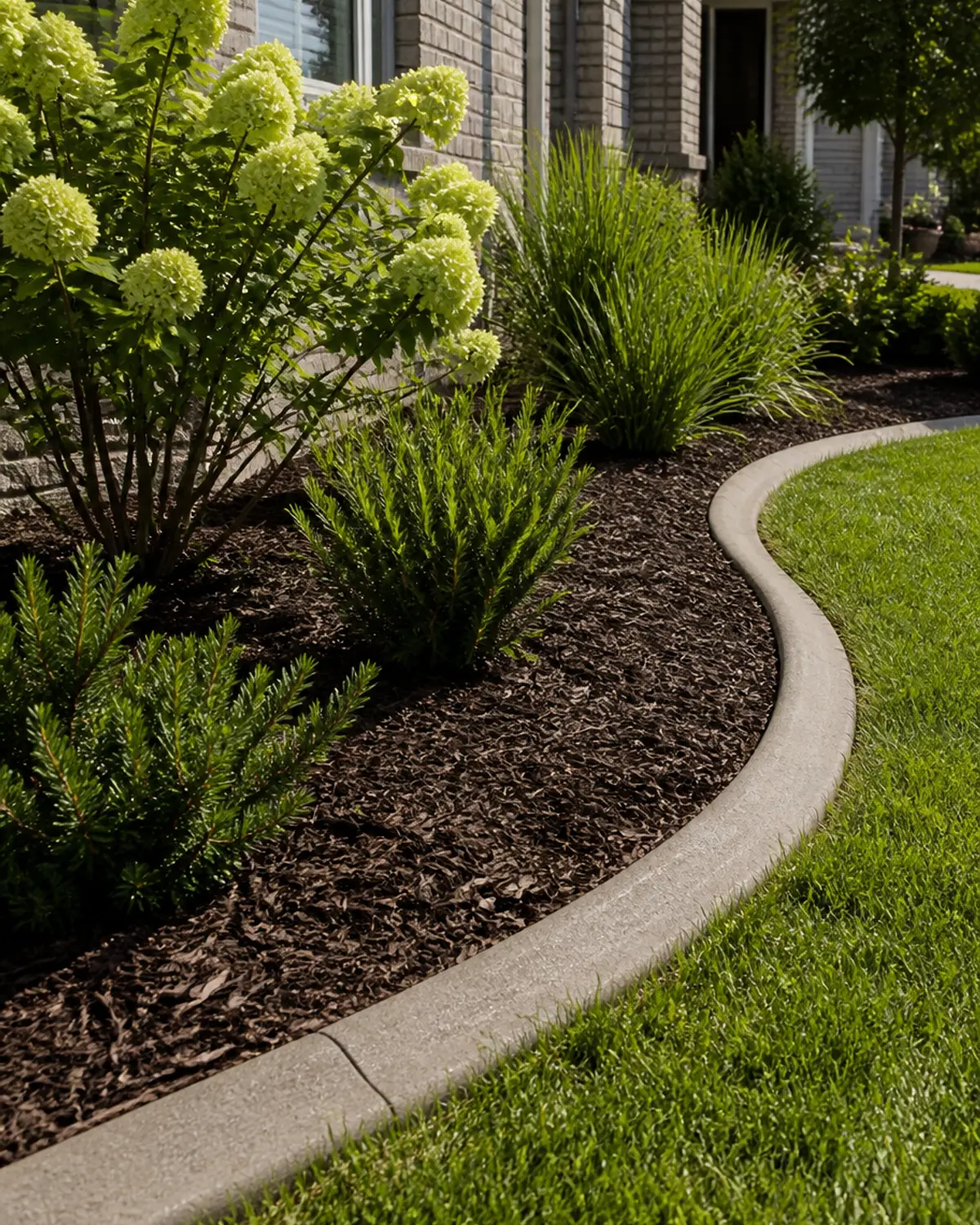
More mulch is not automatically better. Purdue's mulch-management guidance recommends maintaining organic mulch at roughly 2 to 3 inches, refreshing or fluffing existing mulch rather than always adding a new layer, and keeping mulch 2 to 3 inches away from tree trunks and shrub crowns.
Piling mulch against trunks or stems can hold moisture against the bark, which is associated with decay and rodent activity. A quick check during spring cleanup:
- Measure existing mulch depth before adding more
- Pull back any mulch that is touching trunks or crowns
- Fluff compacted mulch instead of burying it under a fresh layer
- Top off thin or worn areas rather than mulching the entire bed uniformly
When a Cleanup Points to a Bigger Problem
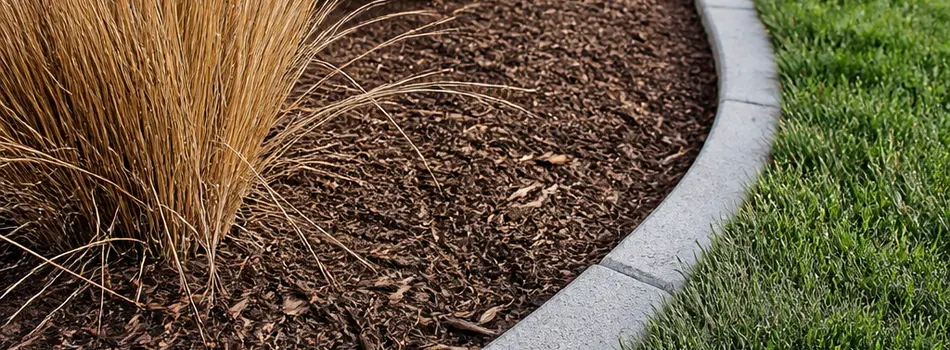
Most beds just need debris removal, pruning, and a mulch refresh. But some signs suggest the bed needs more than routine maintenance:
- Recurring mulch washout after normal rain, even with proper depth
- Shifting or crumbling borders that reappear every season
- Exposed soil along edges that will not hold mulch or ground cover
- Poor lawn-to-bed transitions where grass and bed material blend together
For beds with persistent edge or border problems, landscape installation and maintenance services can address reworking bed lines as part of a broader refresh. Stryker also offers decorative concrete curbing and landscape edging coordination for beds that need a clearer, more durable separation between turf and planting areas.
If roof runoff is the culprit behind repeated mulch or soil washout near a downspout, handcrafted downspout extensions (starting at $150 each) are planned around the downspout connection, outlet location, grade, and surrounding surfaces to redirect that specific flow of water. A downspout extension cannot correct a clogged gutter, and standing water, erosion, or water bypassing the intended route may point to a condition beyond what the extension alone can solve.
Early weeds also deserve attention during cleanup. Catching them before they spread or seed is far easier than managing an established patch later in the season, and it keeps a simple refresh from turning into a bigger job later.
Frequently Asked Questions
When should I prune shrubs during spring landscape cleanup?
It depends on the plant. Remove dead, damaged, or diseased branches right away. Prune summer-flowering shrubs before new growth starts, but wait until after flowering to prune spring-flowering shrubs that bloom on old wood.
How much mulch should remain in a landscape bed after winter?
Aim for roughly 2 to 3 inches of mulch, keeping it away from tree trunks and shrub crowns. If existing mulch is still in good shape, fluffing it is often enough rather than adding a full new layer.
What does mulch washout after rain tell me about my landscape bed?
Occasional washout after heavy rain is normal, but recurring washout, shifting borders, or exposed soil can signal that the bed line or water path needs a closer look rather than just another bag of mulch.
Get Your Beds Ready for Spring
If your landscape beds in Washington, Indiana or anywhere across Southern Indiana need debris removal, pruning, bed line repair, or a mulch refresh this spring, Stryker Outdoor Solutions can help as part of scheduled lawn maintenance and landscape care. Call (812) 240-2605 to talk through what your beds need this season.