Profile Selection
Choose the mould height that fits the property and desired presence of the border.
- 3-inch low mould
- 5-inch HD mould
Custom Concrete Curbing
A property with several corners, curves, or future phases needs more than a one-size-fits-all strip. Stryker Outdoor Solutions plans custom concrete curbing around the actual beds and transitions, with two profile choices, retained color combinations, and stainless-steel cable through the curb.
Planned for the Property
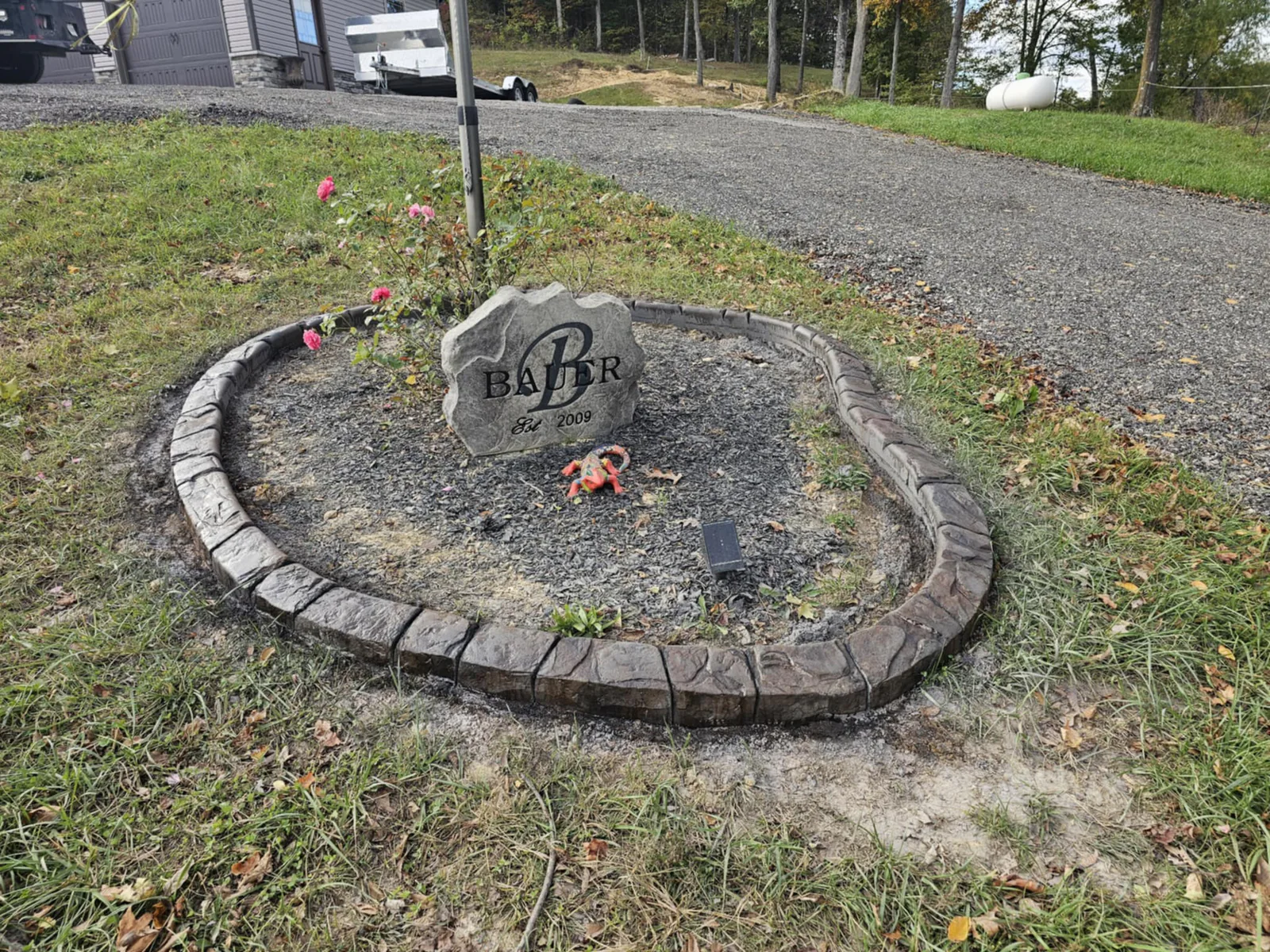
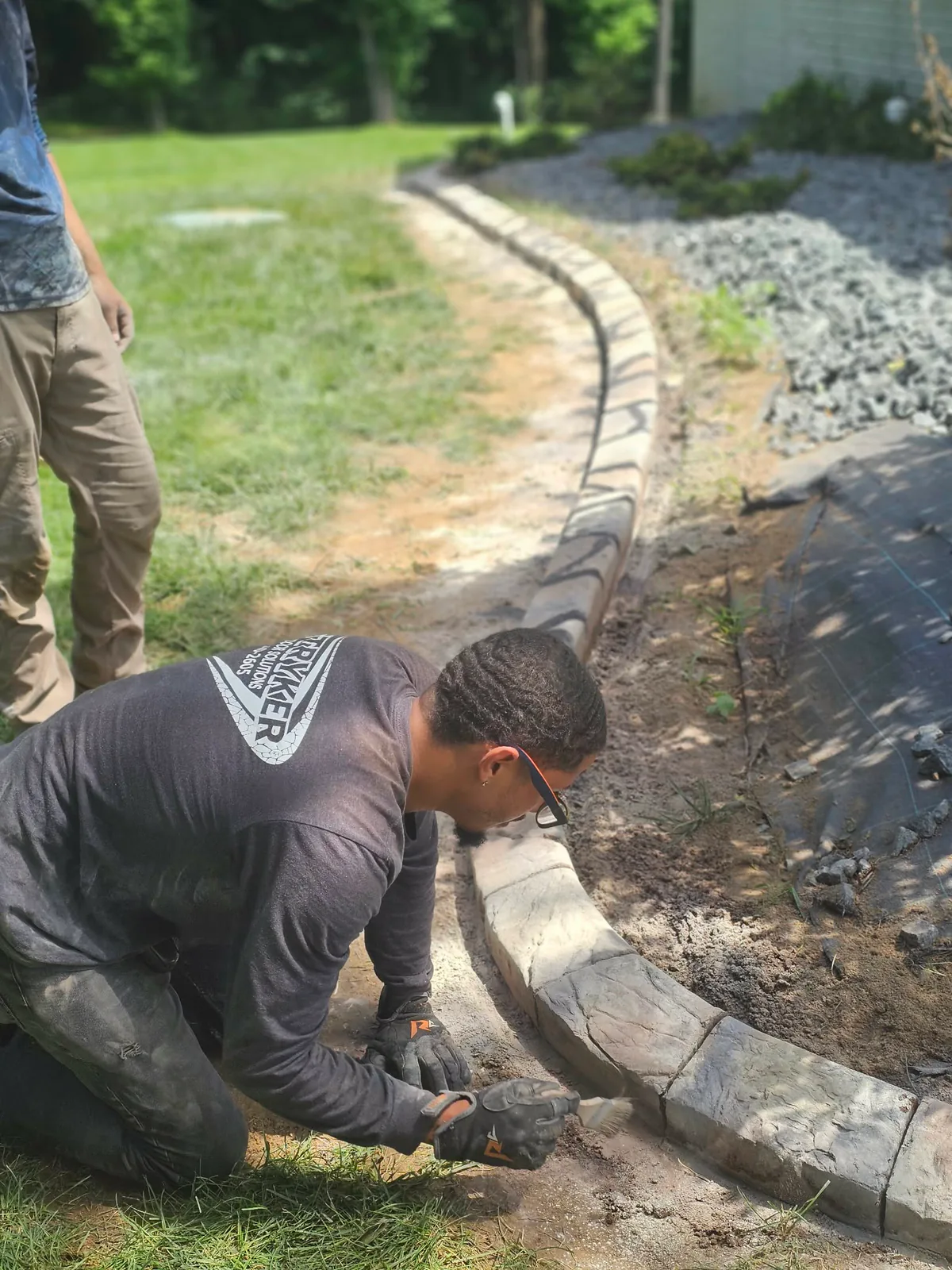
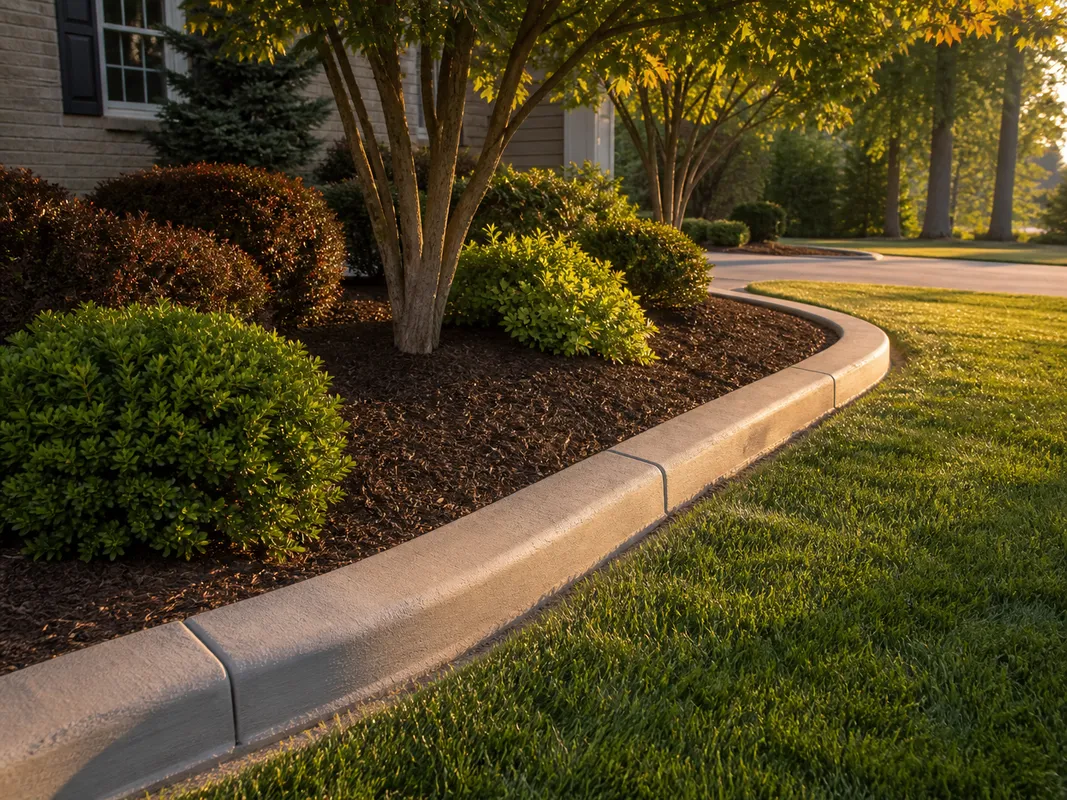
Custom concrete curbing is a continuous landscape border planned around the property instead of selected from a fixed, pre-shaped layout. The work can account for curved beds, straight sections, corners, transitions, existing curb, and the possibility that more sections will be added later.
Stryker offers a 3-inch low mould and a 5-inch HD mould. The HD mould is suggested for premium and natural-stone detail. Stainless-steel cable runs through the curb to help resist heaving and shifting, while the final layout is shaped around the landscape being edged.
Customization Categories
Customization starts with the property, the desired visual weight, and the border's practical purpose. Compare Stryker's current profiles, style categories, colors, and patterns during the estimate to build the right combination.
Available choices
Choose the mould height that fits the property and desired presence of the border.
The basic category is the entry point for a custom layout when the homeowner wants a defined concrete border without the premium or farmhouse-brick price category.
Premium and natural-stone detail are offered as a higher-priced category, with the 5-inch HD mould suggested for the added detail.
Farmhouse brick concrete curbing is a separate style category with a starting price of $2,500.
A custom plan can be installed in sections because Stryker retains the project's color combinations. Future additions can be connected to existing curb after a site-specific review.
The estimate is the place to select the profile height, style category, color direction, total length, and whether the project should be phased. Those choices are then captured in the proposal.
Request A Fast Quote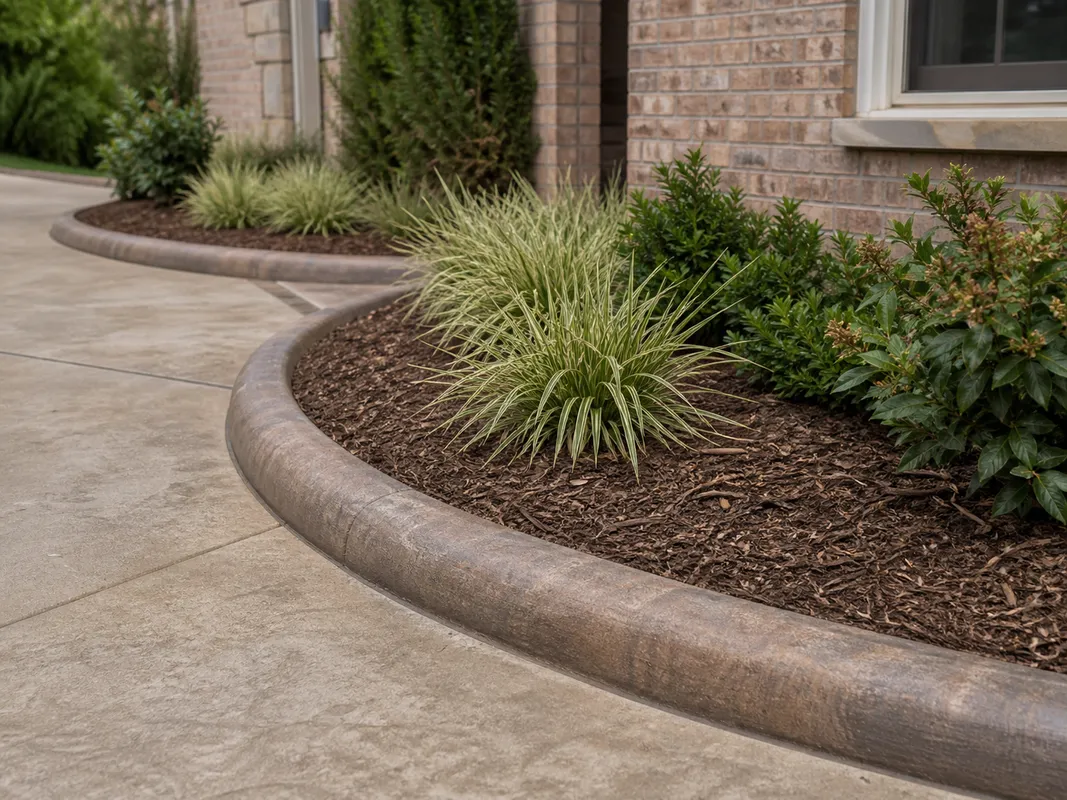
Coordinated Color Direction
Custom does not have to mean inconsistent. Stryker documents using color variations and combinations to create a more natural look, then retaining those combinations so later phases can coordinate with the original work.
The color direction should be reviewed beside the home, landscape materials, and existing hardscape. Stryker presents current color samples during the consultation.
Stryker uses different techniques and color combinations to create a realistic, natural-looking result with visual depth.
If the initial plan is larger than the first installation, Stryker can keep the color combinations on file. That gives future extensions a known starting point rather than relying on memory or a generic color label.
Built Around the Layout
Custom planning matters most when the property has more than one simple straight edge.
Common uses
Beds with repeated corners, curves, and changing widths need a layout that is considered as a whole. Stryker can review the run length and profile before confirming the scope.
Popular options: 5-inch HD mould; premium / natural-stone category
Learn more: Decorative Concrete BordersA homeowner may want to edge the front beds now and return to the side or back areas later. Retained color combinations make that phased approach possible, subject to future availability and site review.
Popular options: Match the recorded color combination; phase-specific layout
Learn more: Landscape EdgingAn existing curb can be extended by cutting at a control joint, drilling into the old curb, and adding fiberglass rebar to connect the old and new sections. The connection should be reviewed on site before the addition is promised.
Popular options: Existing-profile match; retained color combination
Learn more: Concrete CurbingCompare your options
|---|---|---|---|
Custom concrete curbing wins when the property's layout and future plan matter as much as the border material. It carries a higher starting investment than basic flexible edging, but it is built around a continuous, custom-shaped border.
The simple routine
Protect the finished work, keep the surrounding area clear, and address changes early.
Care Over Time
Custom does not change the basic care plan: keep the curb visible and schedule resealing every 2–3 years.
Stryker recommends resealing the curb every two to three years. Follow the preparation and product guidance provided for the installed finish.
Do not bury custom corners, curves, or transitions under mulch or soil. The more visible the layout remains, the easier it is to maintain and review.
Retain the project's color combination and any approved profile information. If the border is expanded later, those details can guide the new section.
When adding to an existing curb, the connection method is specific: cut at a control joint, drill into the old curb, and use fiberglass rebar to connect the sections. Have Stryker review the existing curb before planning the addition.
Custom Work, Proven Details
A custom border is judged by the transitions: how the curve turns, how the profile fits the bed, and whether a later addition can connect without looking like an afterthought.
Stryker specializes in detailed yards with many corners and curves. Custom curbing is planned around those conditions instead of forcing every property into one standard line.
The 3-inch low mould and 5-inch HD mould give the project two clear starting points. The HD mould is suggested for premium and natural-stone detail; the low mould offers a lower-profile alternative.
Homeowners do not have to install every planned section at once. Retained color combinations allow future additions to start from a recorded design decision.
Common Questions
The layout can be planned around curved and straight sections, corners, transitions, and future additions. Profile choices include a 3-inch low mould and a 5-inch HD mould, with current colors and patterns reviewed during the estimate.
Yes, an existing curb can be extended. Stryker cuts at a control joint, drills into the old curb, and uses fiberglass rebar to connect the old and new sections after reviewing the existing installation.
Yes. Stryker keeps the project's color combinations on file, which supports phased additions. When the next phase is planned, Stryker reviews the existing curb, site conditions, current color availability, and the best connection point.
The low mould is 3 inches tall. The HD mould is 5 inches tall and is suggested for premium and natural-stone detail. The right choice depends on the desired profile, the landscape, and the exact style category selected.
Installation typically takes a few hours to one full day, based on the length of the curb. Curves, corners, access, existing-curb connections, and project phases can affect the schedule.
Starting prices are $1,800 for basic concrete curbing, $2,300 for premium / natural-stone concrete curbing, and $2,500 for farmhouse brick concrete curbing. The actual estimate depends on length, layout, profile, and selected category.
Stryker recommends resealing every two to three years. Keep the curb visible and ask for the current product-specific care instructions.
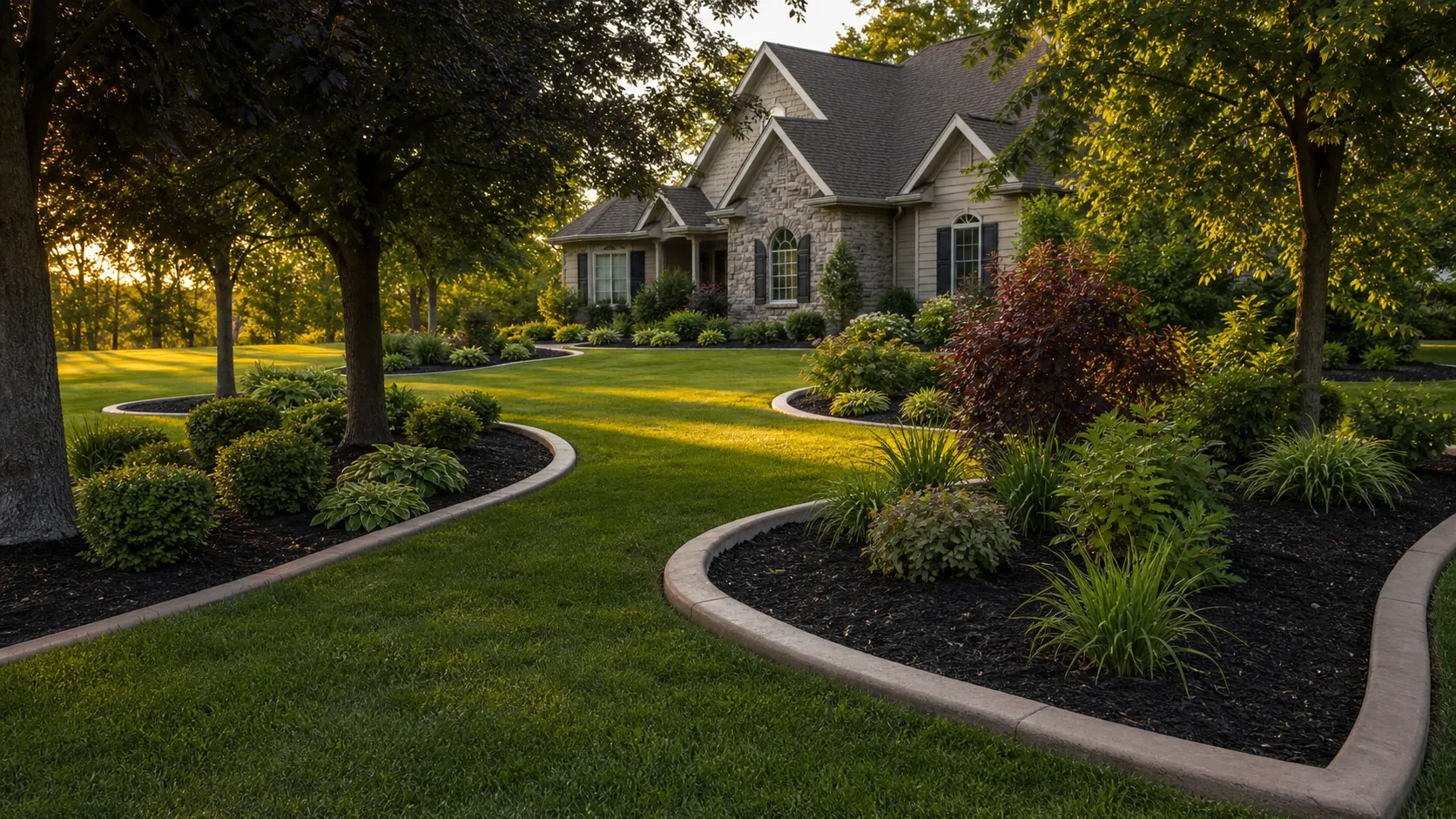
Describe the curves, corners, existing sections, and future phases through the contact form. Stryker can review the landscape, discuss the two mould heights and current style categories, and prepare a property-specific estimate.
The first step is a clear look at the property and the border you want to build. Color and pattern selections are finalized during the estimate process.
10+ years in the trade
Veteran-owned business