
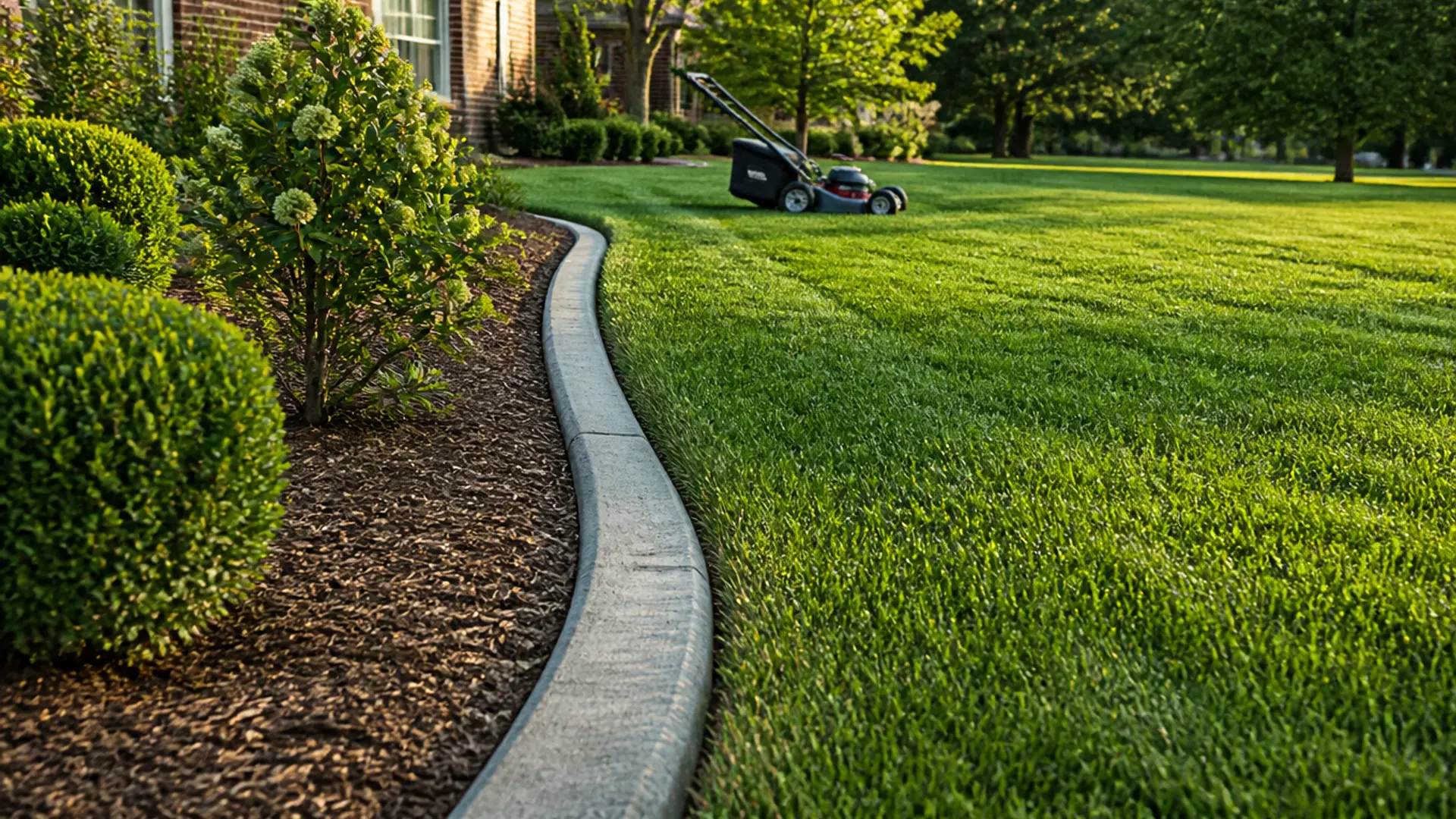
How a Continuous Curb Creates a Cleaner Mowing Line
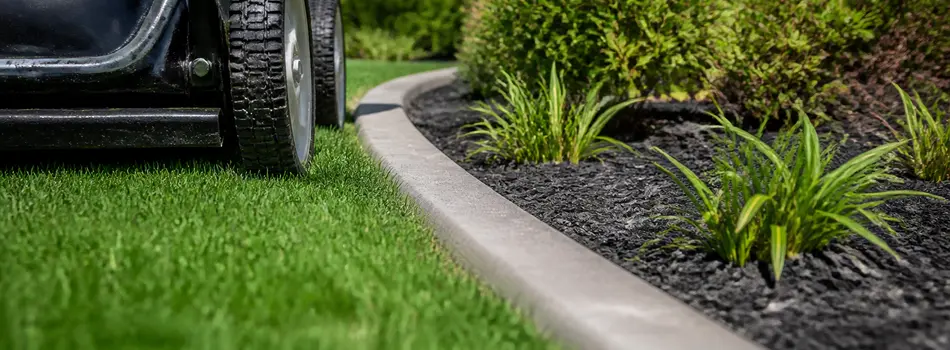
Stryker installs reinforced concrete curbing as a continuous border beside lawns, mulch, planting beds, walkways, and other landscape areas, with a fixed edge and a cleaner mowing line as the core outcome. Because the curb is one unbroken run rather than a series of connected pieces, mowing and trimming equipment has a consistent stopping point to follow along the entire border.
It is worth separating that benefit from a bigger claim. A fixed curb line does not make a yard maintenance-free. What it does is remove the guesswork of where turf should end and the bed should begin, so the actual trimming and mowing routine stays more consistent along that boundary.
Local Conditions That Affect the Edge Over Time
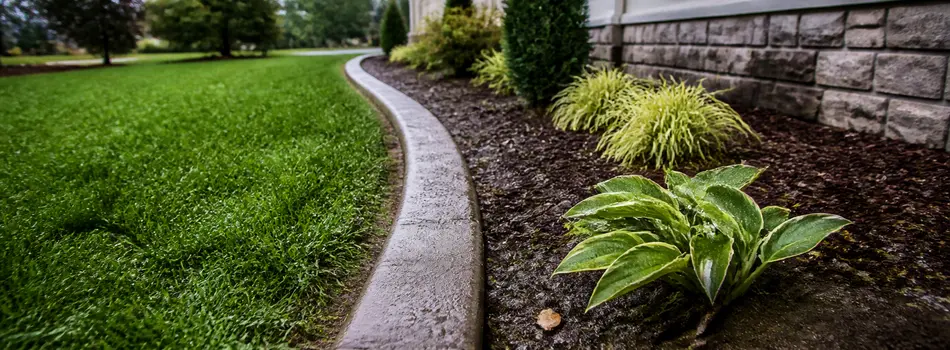
A mowing edge is only as reliable as the ground underneath it. Southern Indiana's freeze-thaw cycles can change soil moisture and surface stability through the year, so a border placed in a low-lying or poorly drained area should be evaluated for drainage and ground movement, not just appearance. A curb that shifts or heaves can throw off the clean line it was installed to create.
To help resist that movement, Stryker runs stainless-steel cable through its curbing as reinforcement. That added support is a meaningful quality factor, since movement in the border can affect both how well it holds the mowing line and how it looks over time.
For context, industry guidance on mower-friendly curb design (outside of Stryker's own installations) describes a gently sloped or rounded profile that can let mower wheels roll closer to the bed edge, which is one reason curb shape is discussed alongside reinforcement and drainage when planning a border. You can read more on that general design concept from Curb Depot's mower-style curbing guide.
Choosing a Curb Profile for Your Yard
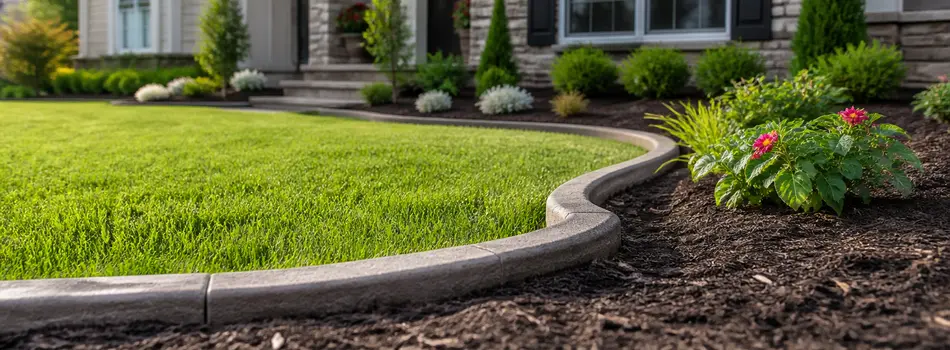
Curb height is a practical decision, separate from any decorative finish. Stryker offers a 3-inch low mould for a lower, more restrained lawn-to-bed transition, which keeps the border understated while still defining the mowing line. For premium or natural-stone detail work, Stryker suggests its 5-inch HD mould, since the taller profile gives decorative finishes more visible surface to showcase.
Beyond profile height, Stryker's curbing options cover a range of looks and applications, including:
- Mower edge and curb installation
- Extruded concrete curbing
- Landscape bed and garden edging
- Residential landscape curbing
- Decorative landscape edging
- Colored and stained concrete edging
- Stamped and textured curbing
What to Expect: Timing, Investment, and Upkeep
Depending on curb length, Stryker states that installation may take a few hours or a full day. Pricing starts at $1,800 for basic concrete curbing, $2,300 for premium or natural-stone curbing, and $2,500 for farmhouse brick curbing, with curves, corners, total run length, site access, and the chosen profile all factoring into a final estimate.
| Factor | How It Affects Your Project |
|---|---|
| Curb length and layout | Longer runs, curves, and corners add to installation time and cost |
| Site access | Easier access to the work area supports a more efficient installation |
| Profile selection | 3-inch low mould or 5-inch HD mould changes both look and starting price |
| Finish category | Basic, premium/natural-stone, and farmhouse brick finishes carry different starting prices |
Once installed, decorative concrete curbing holds up best with routine attention. Stryker recommends resealing finished curbing every two to three years and keeping grass, mulch, soil, and debris from covering the curb line, which helps preserve both its appearance and its function as a mowing boundary.
For a closer look at the full installation process and reinforcement details, visit Stryker's concrete curbing service page, and see the curb resealing page for upkeep on colored or stamped finishes.
Frequently Asked Questions
Can concrete curbing reduce the amount of trimming needed along landscape beds?
A continuous curb gives trimming equipment a clear, consistent edge to follow, which can make trimming along that border more predictable. Actual trimming and maintenance scope still depends on the property and the service agreement in place.
What should homeowners consider besides curb height before installing a lawn border in Southern Indiana?
Drainage, soil-moisture movement from freeze-thaw cycles, and reinforcement all affect how well a border holds its line over time, separate from whether a low-profile or taller decorative curb is preferred.
How often should decorative concrete curbing be resealed?
Stryker recommends resealing finished concrete curbing every two to three years, along with keeping grass, mulch, soil, and debris off the curb line.
Get a Reinforced Mowing Edge for Your Southern Indiana Lawn
If you want a cleaner, more defined line between your lawn and your beds, Stryker Outdoor Solutions installs reinforced concrete curbing for homes throughout Washington, IN and the surrounding Southern Indiana area. Call (812) 240-2605 to talk through profile options and get your curbing project started.