

Why Moisture, Not Just Cold, Is the Real Risk
Concrete that stays saturated with water is far more vulnerable to winter damage than concrete that is allowed to dry. When water sits in the surface and goes through repeated freeze-thaw cycles, it can cause scaling, which shows up as flaking or peeling on the surface. Deicing chemicals can make this worse by increasing how much moisture the concrete is exposed to. The National Ready Mixed Concrete Association notes this is a moisture exposure issue as much as a temperature one, which is why drainage and cleaning matter just as much as watching the forecast.
Standing water near a curb line is worth paying attention to. If salt solutions or runoff are pooling against the border instead of draining away, that recurring exposure can increase the risk of scaling over time.

Deicer Habits That Protect Your Curbing
Not every ice-melting product is suitable for use near decorative curbing. A few precautions go a long way:
- Avoid using deicing chemicals on or near newly installed curbing during its first winter. Clean sand provides traction without the chemical exposure.
- Be cautious with ammonium sulfate, ammonium nitrate, and magnesium-based salts, which can be chemically aggressive toward concrete. Some fertilizer-based ice melt products contain these ingredients.
- Keep the curb line clear of dirt, mulch, and debris buildup to reduce prolonged moisture exposure over the winter.
If you are in the Washington, IN or Southern Indiana area, it helps to think about this before the first hard freeze rather than after. Historical data from the National Weather Service in Paducah shows the Evansville area averages its first 32°F freeze around October 29 and its first 28°F hard freeze around November 8. These are regional averages rather than a guarantee for any single property, but they are a useful reminder to handle cleaning and drainage checks early in the fall.
Routine Wear vs. Damage That Needs a Closer Look
Not every mark on a curb means the same thing, and treating them the same way can lead to paying for the wrong fix. Before recommending any work, Stryker Outdoor Solutions looks at wear, loose material, staining, and cracking, since resealing maintains a sound surface but does not repair structural damage.
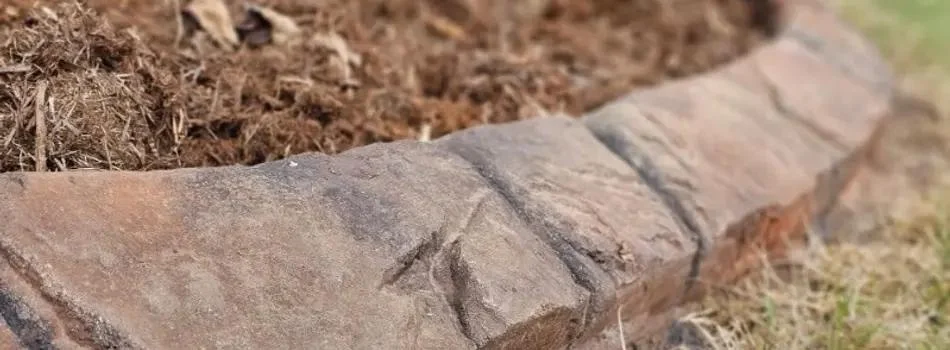
A helpful way to think about it:
- Surface wear: Fading, dullness, or light staining from the season. Resealing can help refresh and protect an otherwise sound finish, although it may not remove existing stains.
- Possible structural concern: Cracking, chipping, loose sections, or visible movement. These should be inspected separately, since a protective coating will not correct them.
If you are unsure which category your curbing falls into, our curb resealing page walks through what we look for during an evaluation.
Timing Maintenance the Right Way
Stryker Outdoor Solutions generally recommends resealing decorative concrete curbing about every two to three years, adjusted based on exposure and the condition of the existing finish. Resealing is typically available between April and December, with actual scheduling dependent on temperature, rain, surface dryness, and proper preparation rather than a fixed calendar date.
Preparation includes removing dirt, mulch, grass clippings, and other buildup, then allowing the surface to dry before any sealer is applied.

During freezing or persistently wet winter conditions, it is better to observe and document problem areas than attempt to apply sealer. Use the colder months to watch for drainage issues, staining, or cracking so you have a clear picture to share with us when conditions are suitable for maintenance.
Protect Your Curbing This Season
If your decorative concrete curbing is showing wear, staining, or signs that concern you, Stryker Outdoor Solutions is based in Washington, Indiana and serves homeowners throughout Southern Indiana. We offer decorative concrete curb resealing and condition evaluations to help determine whether maintenance or further repair work may be needed. Give us a call at (812) 240-2605 to talk through what you are seeing and find out whether your curbing needs simple cleaning, continued monitoring, or a closer look when the weather allows.